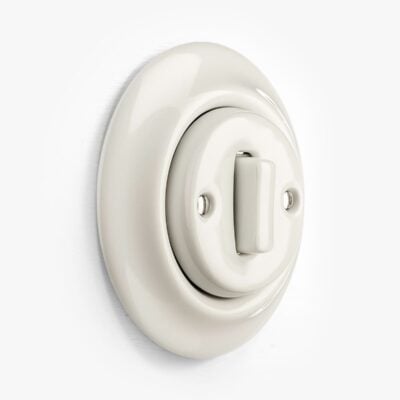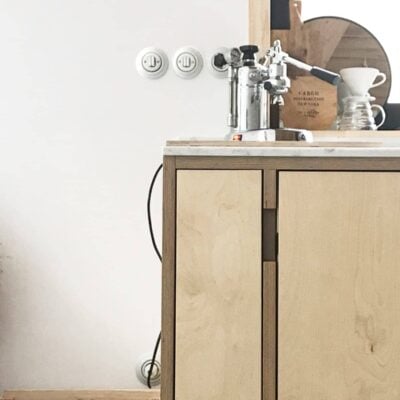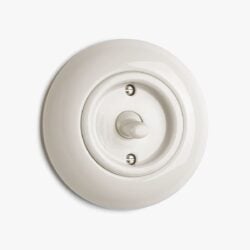
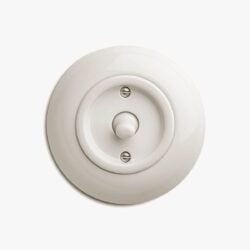
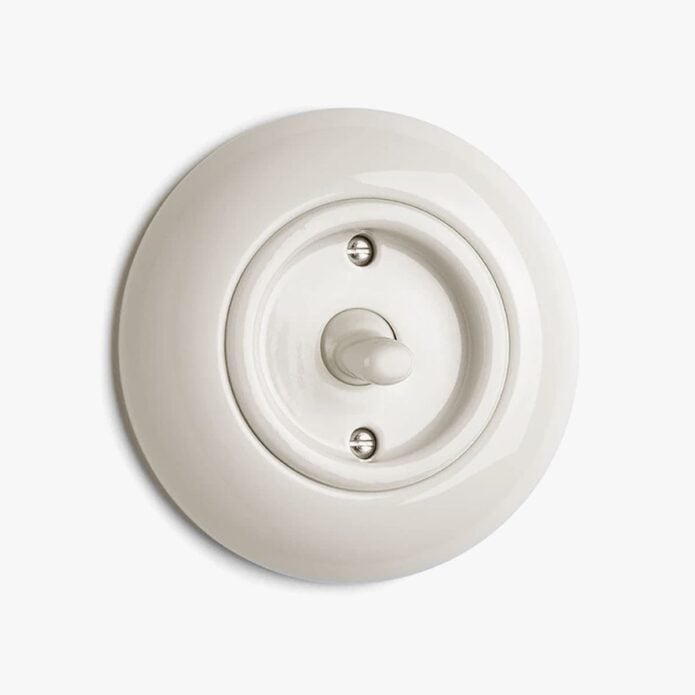


THPG Porcelain White Toggle
From £64.00
The popular THPG Porcelain range now has a toggle switch version too. Porcelain fittings were common in the 1920s, when wall-mounted switches started becoming more affordable.
The finish of these beautiful hand-made pieces is a slightly creamy off-white glossy surface, which complements matt painted walls as well as period wallpaper.
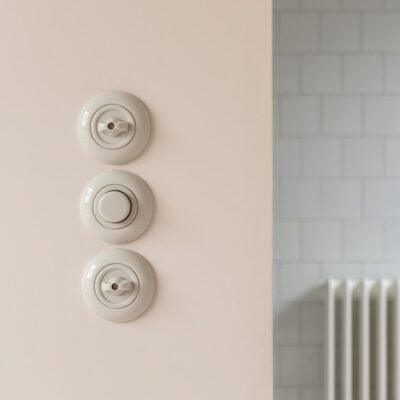
For combining these round switches to create a double (or multiples), you need different backplates which are straightened on one side – or a special 2-gang frame (see picture 5 in the gallery).
NB: These switches are meant to be fitted into European back boxes, not standard British rectangular ones. It is theoretically possible to fit them in a square box and fill in the corners, but it is not recommended.
Please review the “What You Need To Know” section below for essential product details, dimensions, fitting info and more.
Apart from switches, THPG offer a selection of wiring products and functions that can be combined with these frames, such as audio speaker inputs, TV/SAT sockets and network sockets. Contact us for information on other options if you can’t find what you’re looking for.
What you need to know
What’s in the box?
This switch set consists of an insert including a porcelain toggle, a frame and a front plate, fixed with two small screws.


(Click image to enlarge. Pictures for illustration only. Number of gangs and/or finishes might vary)
What does an electrician call this?
This is a 1-gang 2-way 10A single pole switch, or a 1-gang intermediate 10A single pole switch
Where is this used in the home?
A 1-gang 2-way switch is commonly used for controlling a single light source from one or two places. A 1-gang intermediate is used as the middle switch of three, controlling a single light source (for example in a hallway).
Installation
THPG toggle switches require a bit more patience to wire up, simply because they are modelled on original designs and don’t have the modern conveniences of push-contacts and encapsulated backplates.
Just follow the step-by-step pictures below or go to our “THPG toggle switch installation page. Like all THPG switches, these have open screw terminals.
NB: We used a European round box in the step-by-step pictures, but the procedure is the same for square UK boxes.
Wiring

Step-by-step


(Click gallery to enlarge. Number of gangs and/or finishes might vary)
Please refer to our Installation section for more installation advice, manuals and helpful videos.
Dimensions

Does this cover a standard british back box?
No, a 68mm round back box is required. Check the available options below.
How deep does the back box need to be?
This insert is quite deep, it needs at least 45mm. Check the available options below.
 Kaiser back box for solid walls (single, 46mm)
 Kaiser back box, hollow wall, single, 49mm
The detail
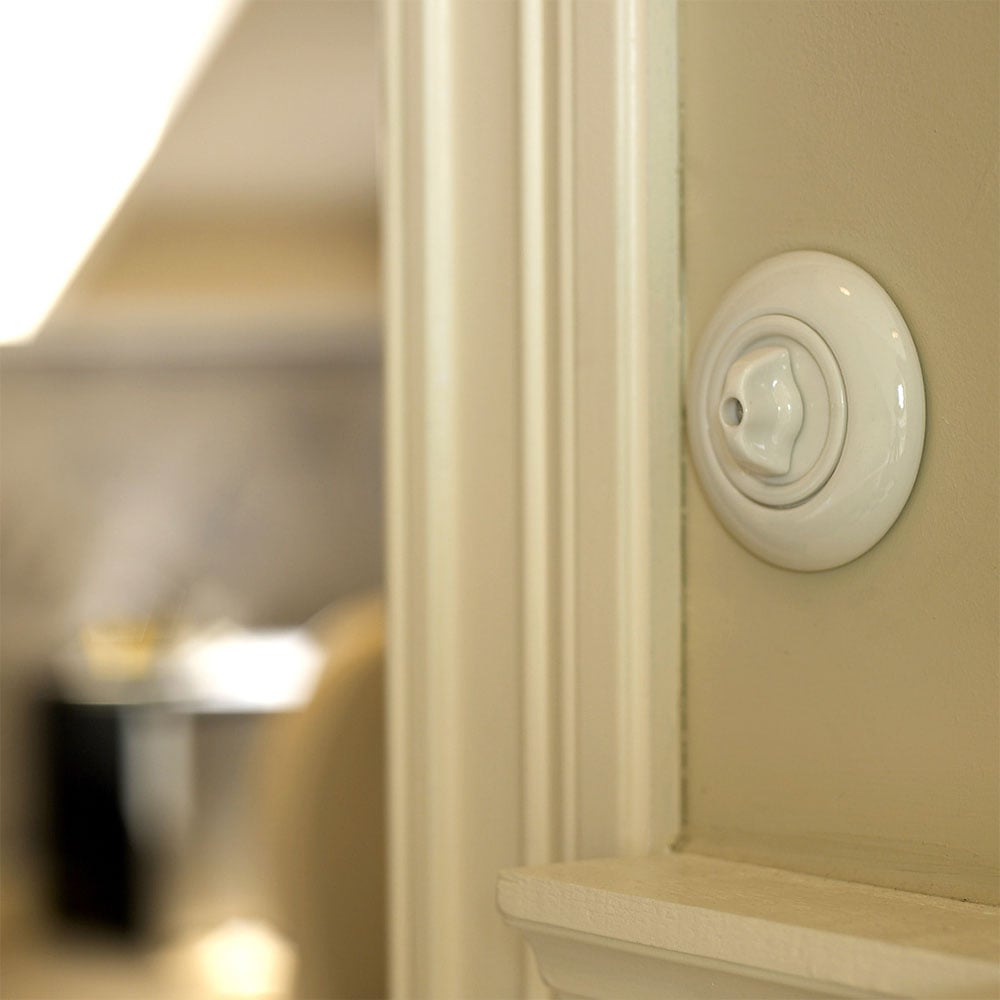
The backplate and inner frontplate are made from 100% industrial grade porcelain, as well as the turning knob to operate the switch. The rotary action produces a very audible and satisfying ‘click’ when turned on and off. For areas where quiet operation is important, maybe our button alternative might be more suitable!
The whole piece with the ceramic and metal insert is noticeably heavier than plastic switches, which gives it a traditional and durable feel.
A USABLE SWITCH THAT SOFTLY SPEAKS VOLUMES

The source
Hand-made and assembled by skilled workers, down the smallest parts of the switch mechanics.
THPG have brought together a producer of electro-technical switches from Westphalia and a producer of electro-technical porcelain from Thuringia. The result is this porcelain switch system: it is both functional and pleasant in three ways: to the eye, to the touch and to the ear
All porcelain parts originate from Schierschnitz in Thuringia, where electro-technical porcelain has been produced since 1913. The porcelain is moulded under a pressure of 35-40 MPa into metal mouldings, then glazed and sintered at a temperature of 1320-1330° C.
The inspiration
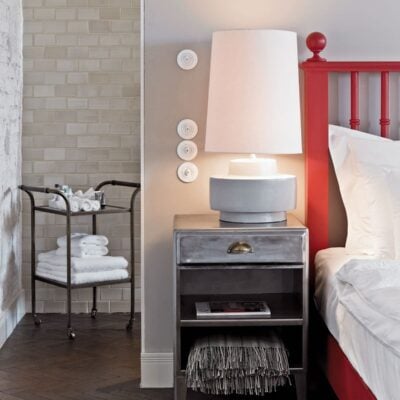
Equally suitable for period wallpapers and the crisp white walls of modernist interiors, this is a switch for interior professionals. The unusual material, combined with a soft round backplate, stands out and adds a quirky retro touch to any interior.
We have seen it used in faithful renovations of 1920s and 1930s properties, as well as adding a light vintage touch to ‘modern country’ styles, fitted to bare plaster walls or tiled kitchen splashbacks.

COMPLETE THE LOOK
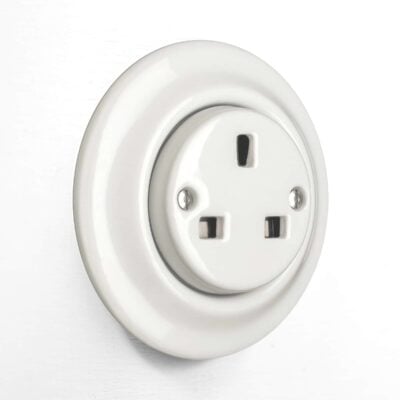
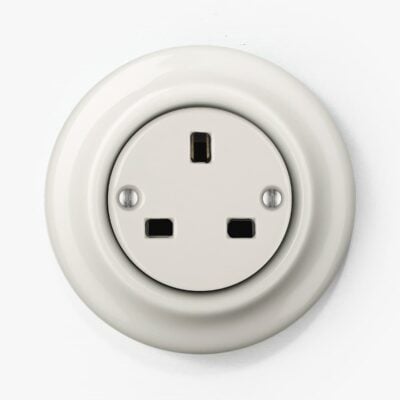
Roo Alba Single Socket
FB Katy Paty, Plug Socket, Retro, Socket, White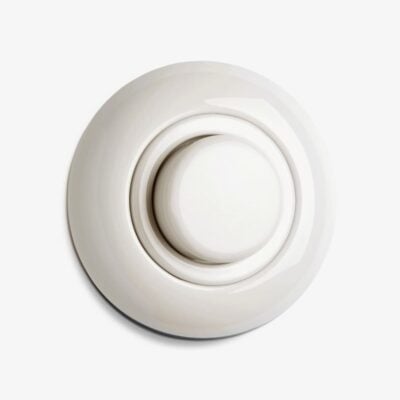
THPG Porcelain White Dimmer
White, Dimmer, Dimmer Switch, FB THPG, Porcelain, Retro, Whites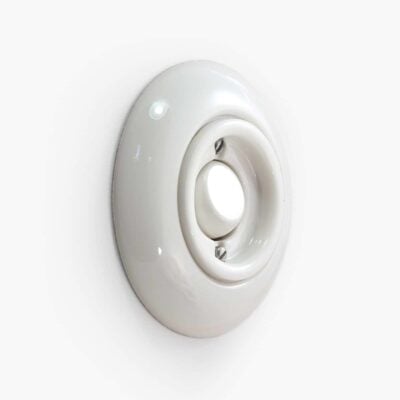
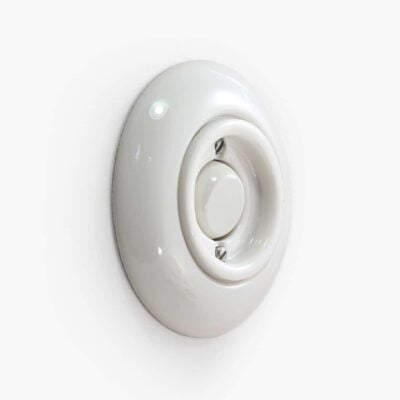
THPG Porcelain Button
Button, FB THPG, Light Switch, Porcelain, Retro, White, Whites
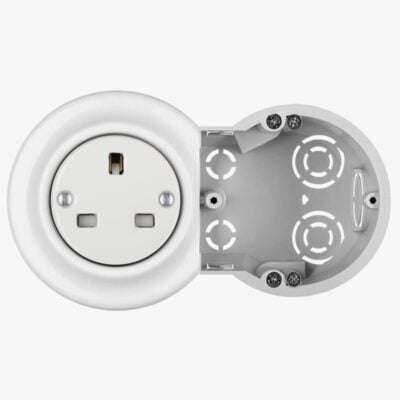
Roo Alba Double Socket
FB Katy Paty, Plug Socket, Retro, Socket, White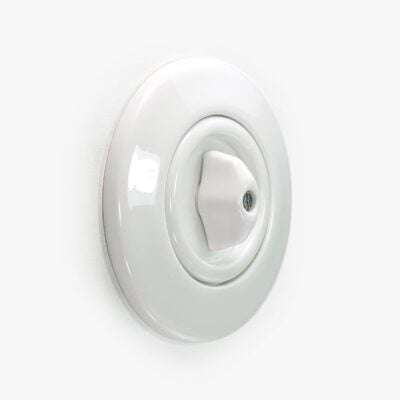
Berker Serie 1930 Rosenthal White
Whites, FB Berker, Light Switch, Porcelain, Retro, Rotary, White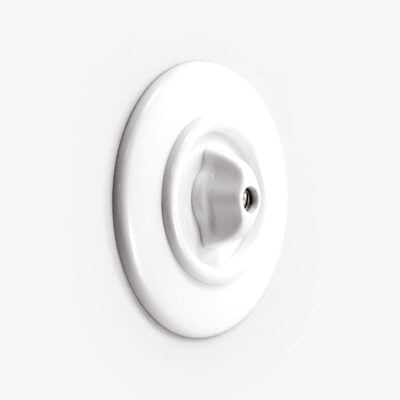
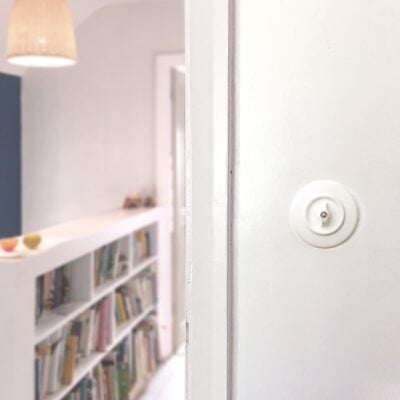
THPG Duroplast Rotary Round
FB THPG, Light Switch, Plastic, Retro, Rotary, White, Whites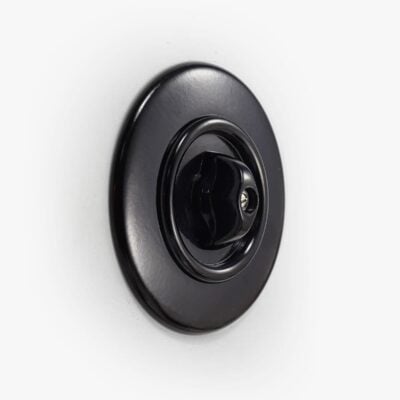
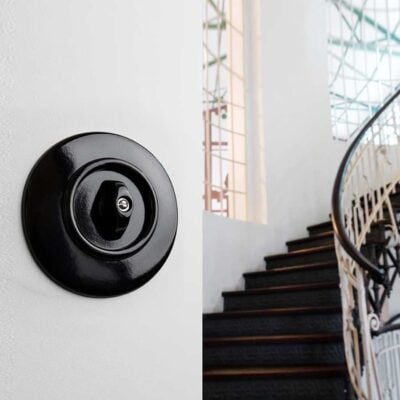
THPG Bakelite Rotary Round
Black, Dark, FB THPG, Light Switch, Plastic, Retro, Rotary